Sliding Fields
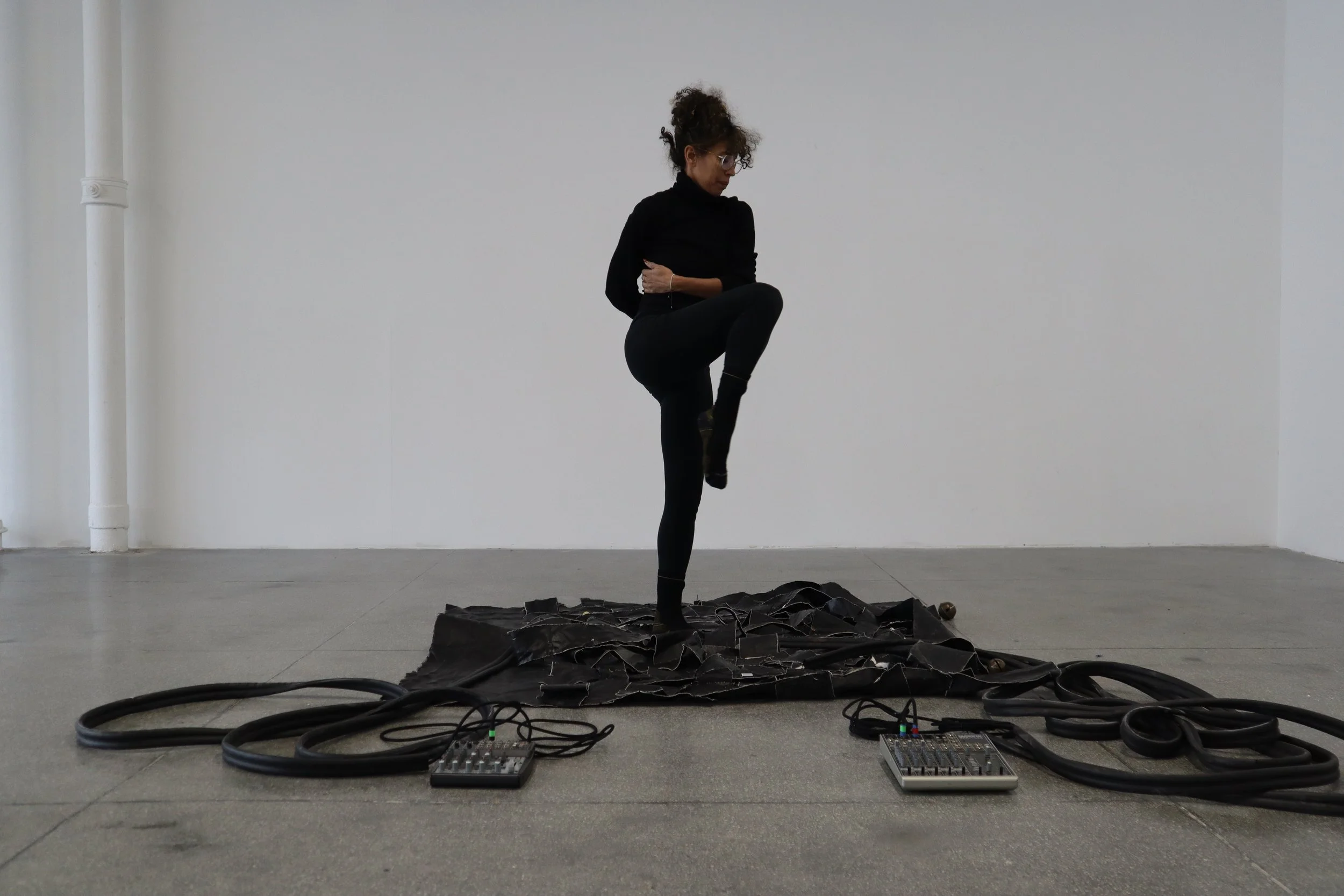
ONGOING PROJECT: 2025–PRESENT
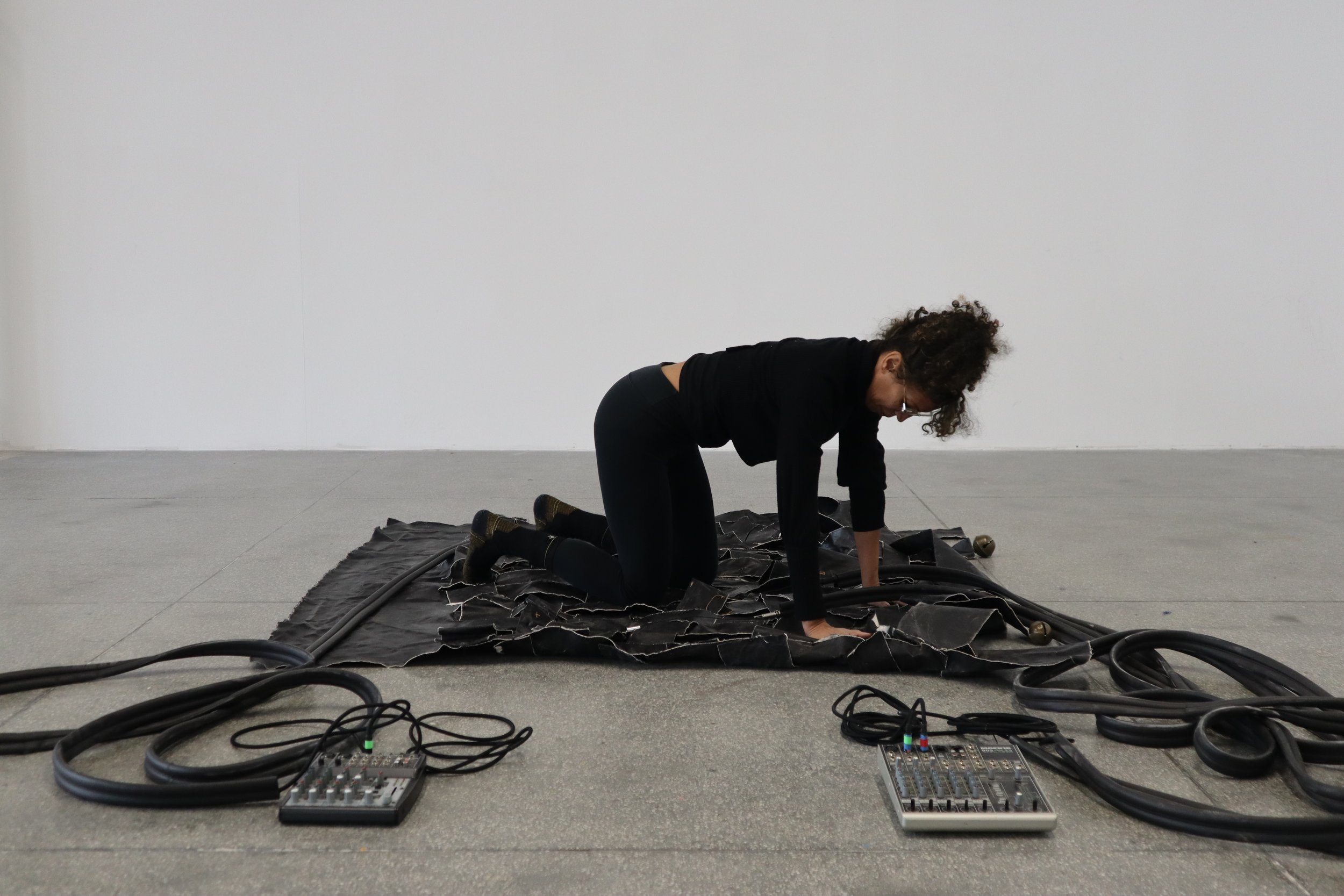
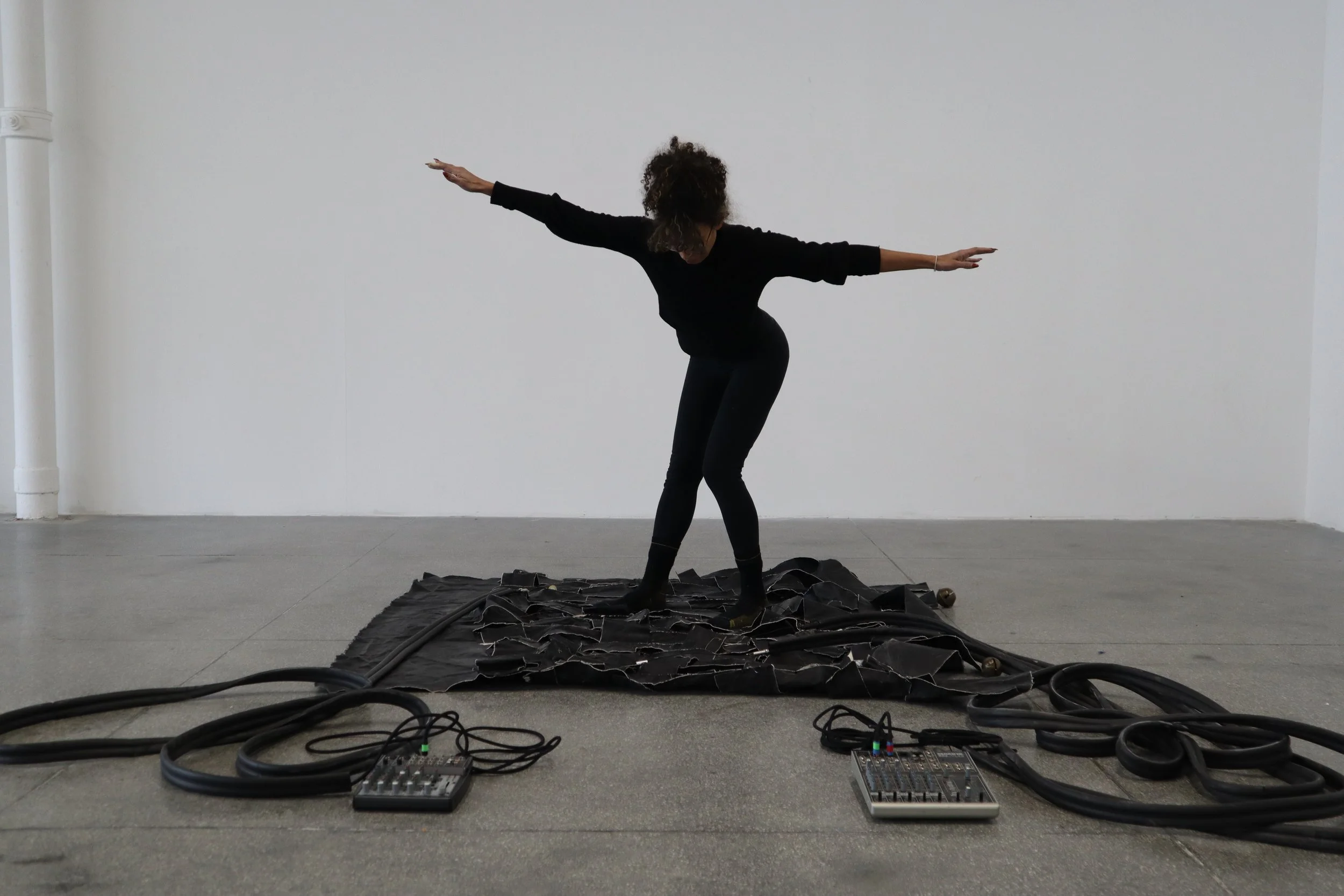
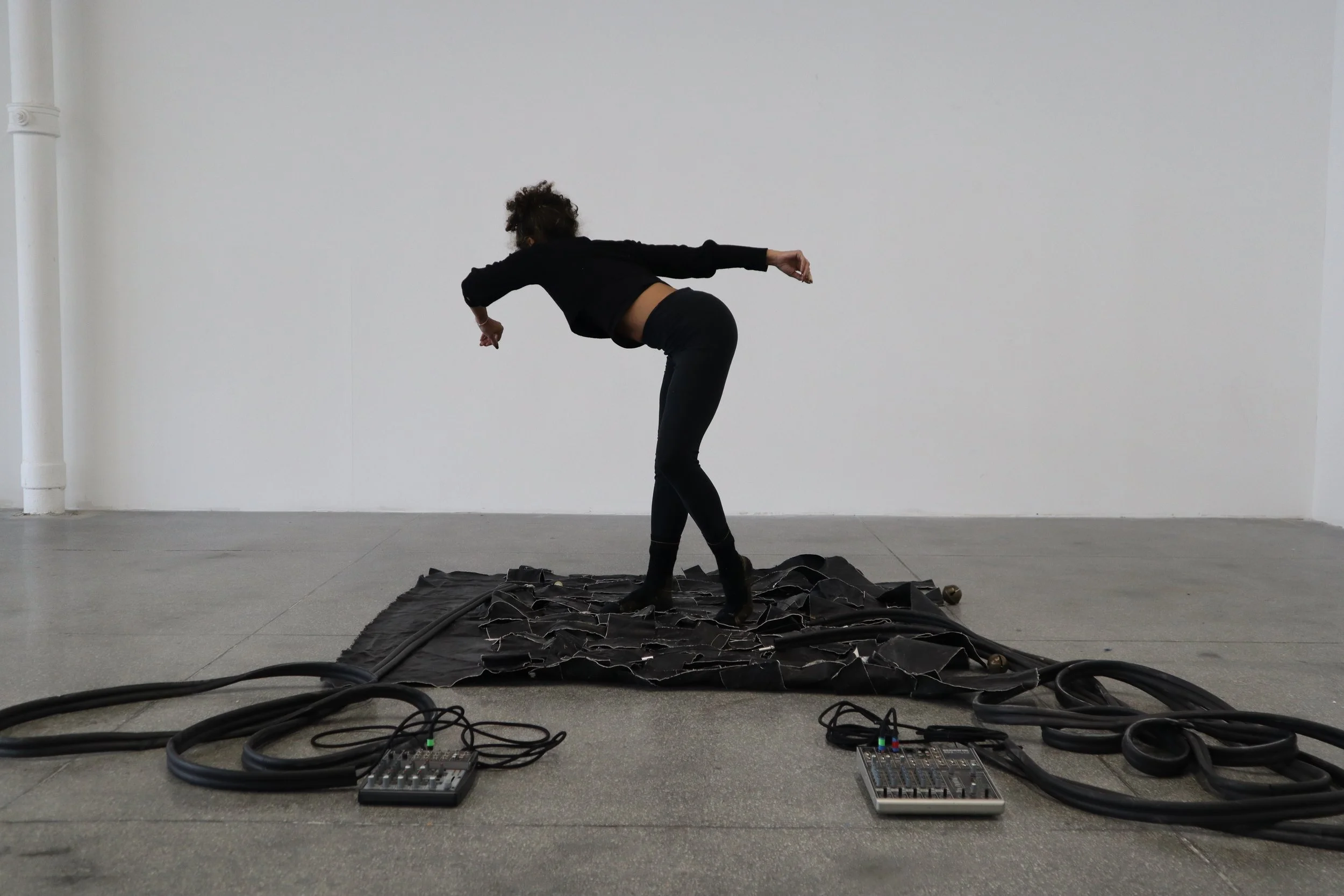
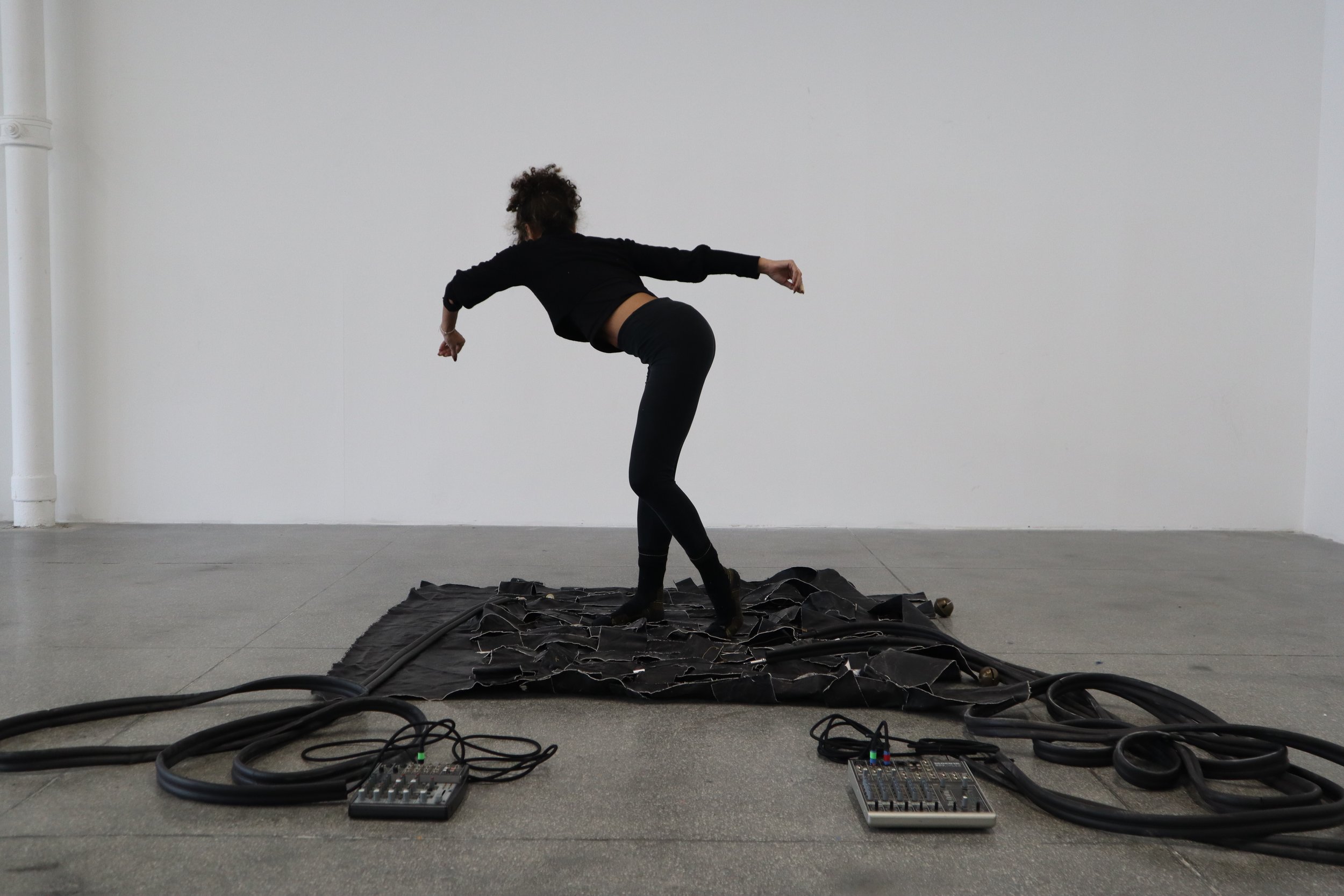
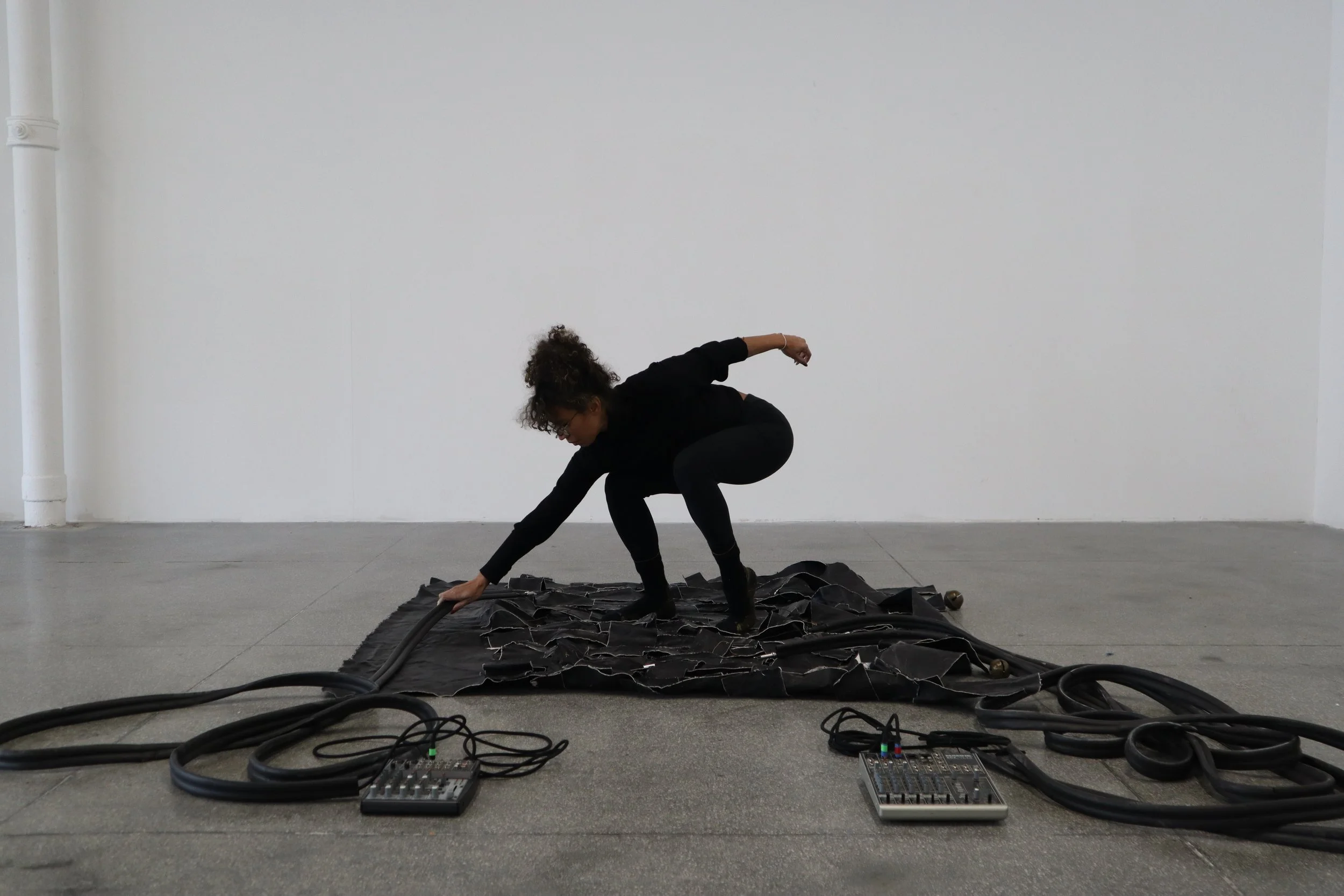
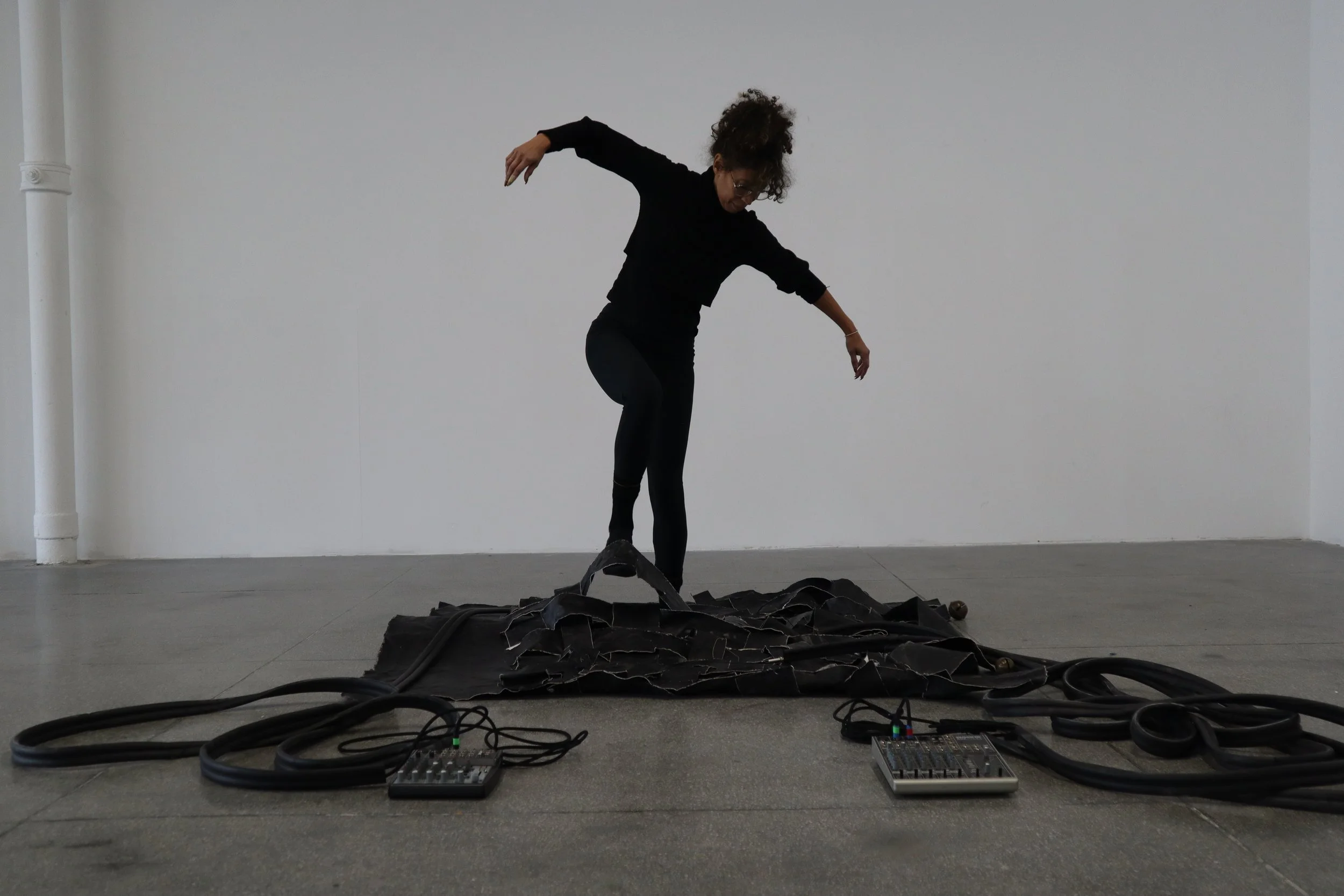
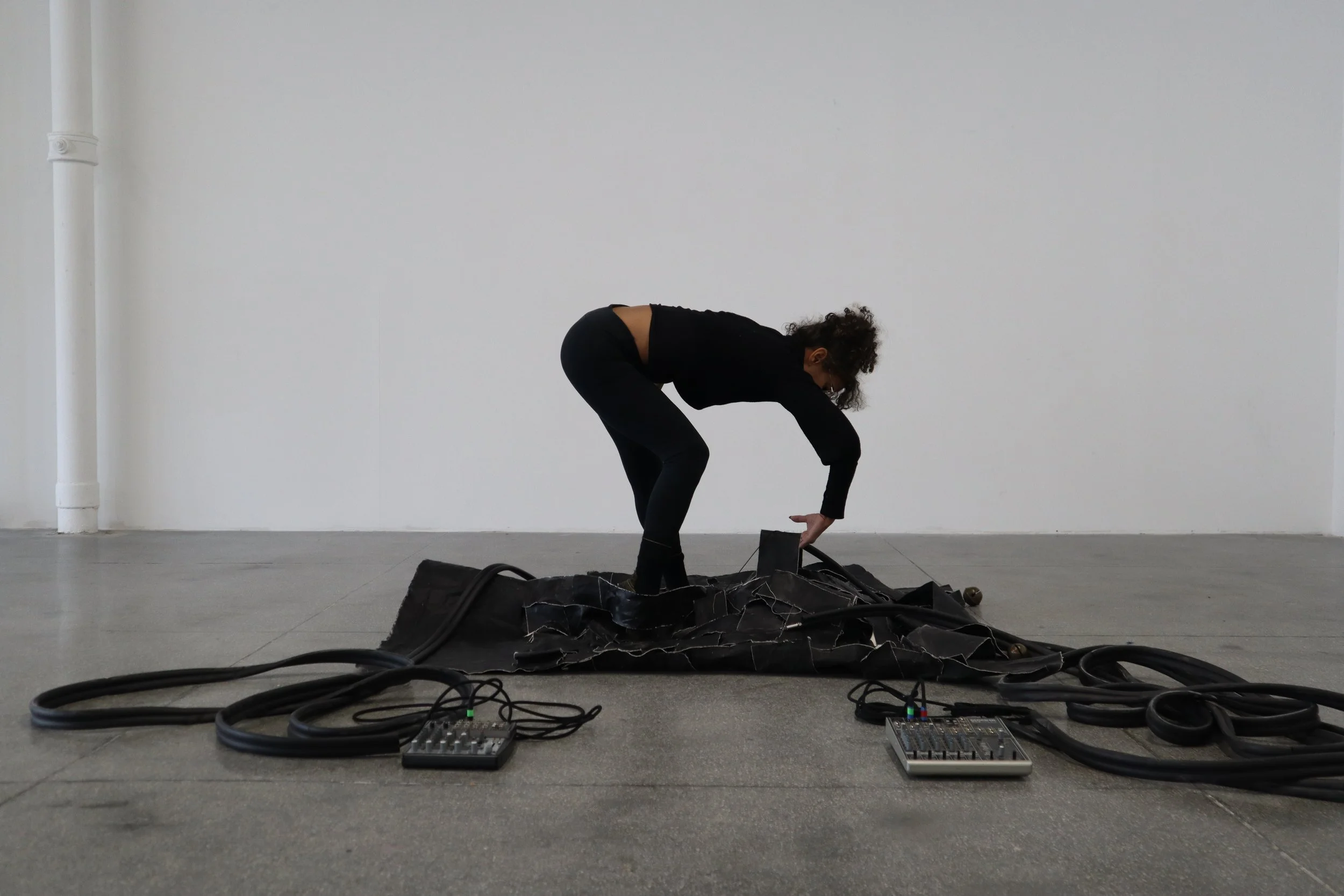
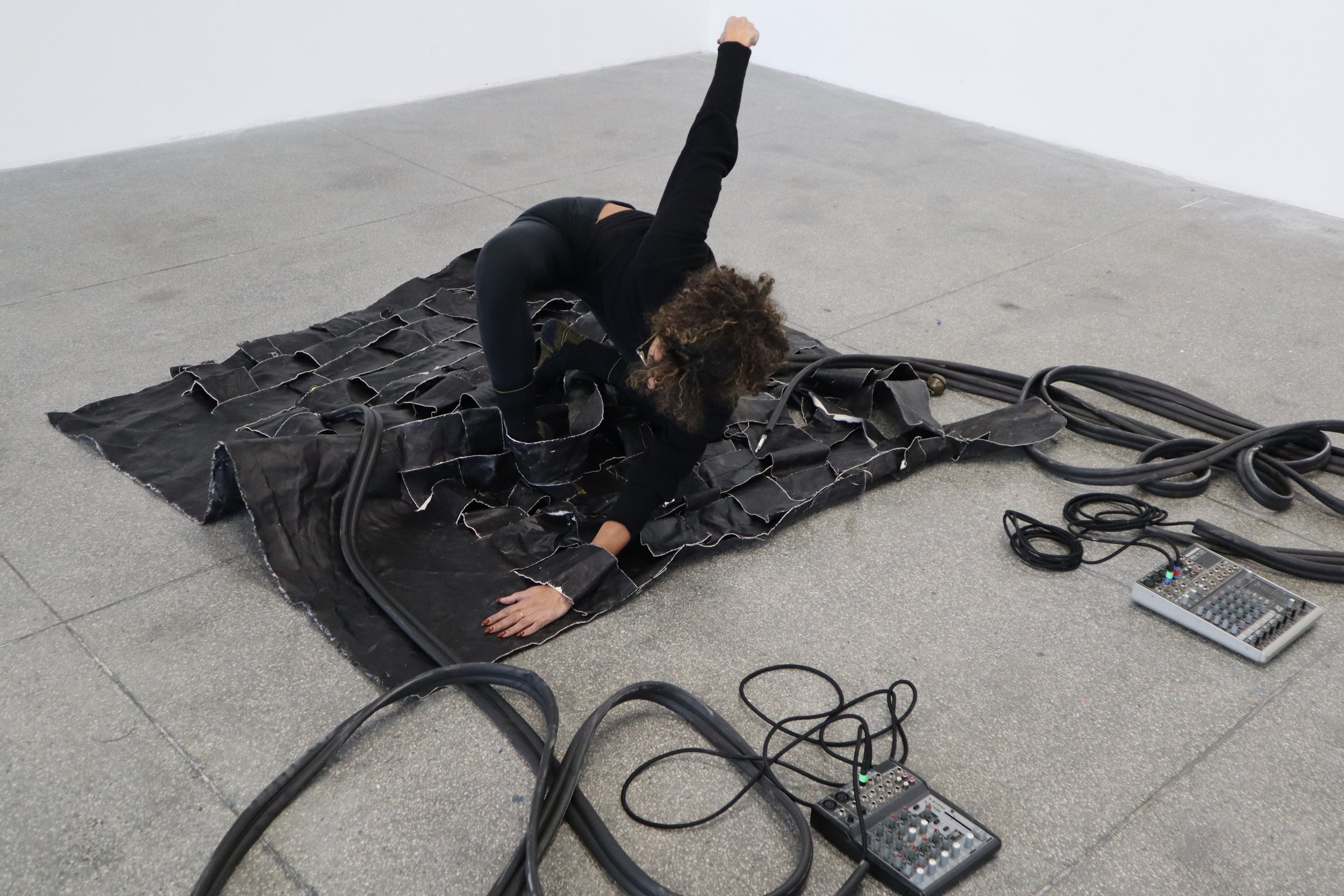
Sliding Fields is a sculptural sonic instrument I am building as a listening practice.
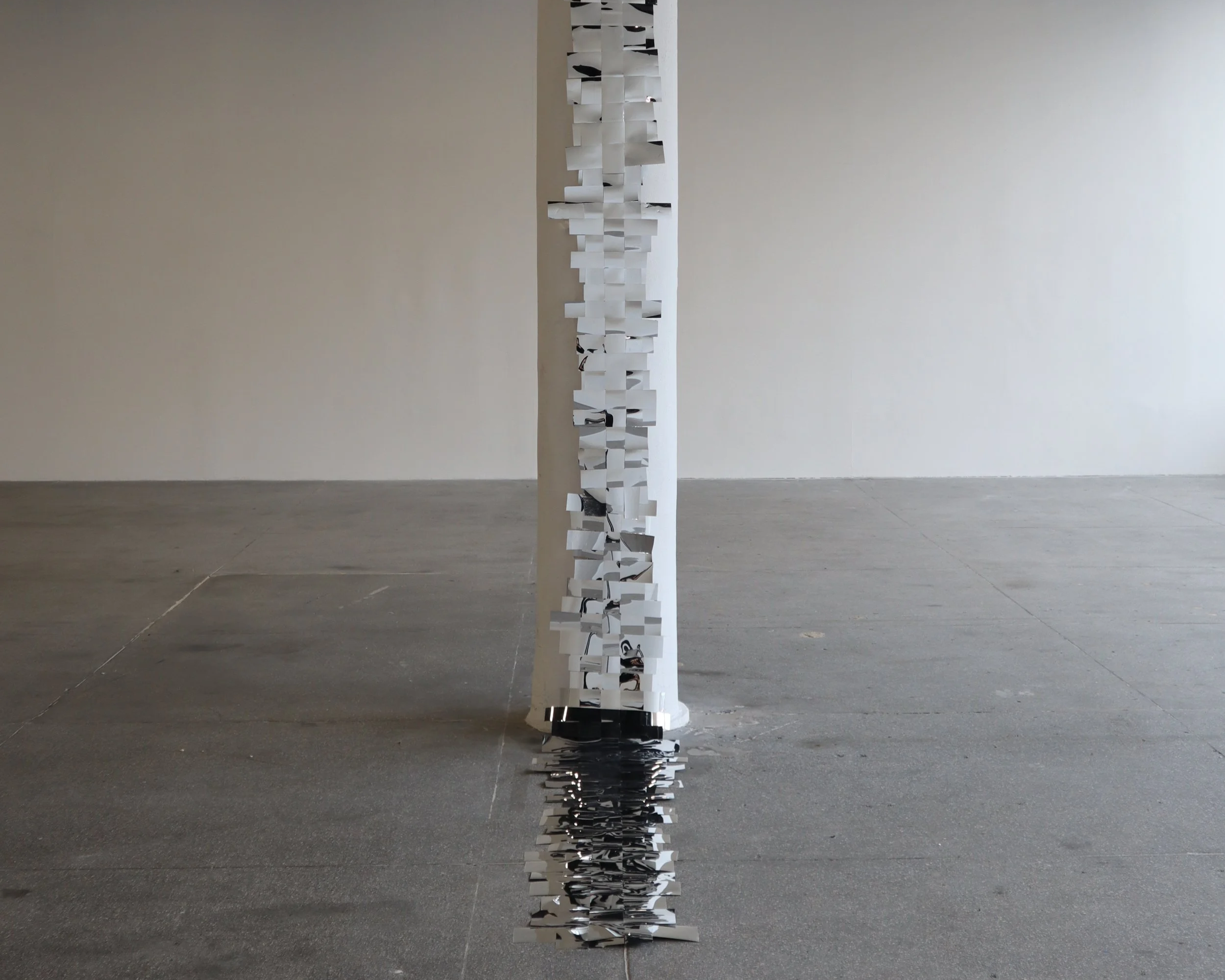
I began developing the work to deepen my capacity to hear — not only audible tone, but vibration, residue, and accumulation. Instead of projecting sound outward, I embed contact microphones directly into woven canvas, wood, and magnetic tape. These microphones function as structural sensors, registering pressure, friction, air movement, and the subtle vibration that gathers in a room.
The system is composed of three elements: a ground weave, an elevated woven form, and a deconstructed tape structure. Each operates as both sculpture and interface. The woven surfaces act as acoustic membranes, translating shifts in weight and duration into tone. The tape is treated not as playback but as material — its sound changes depending on speed, angle, moisture, and resistance.
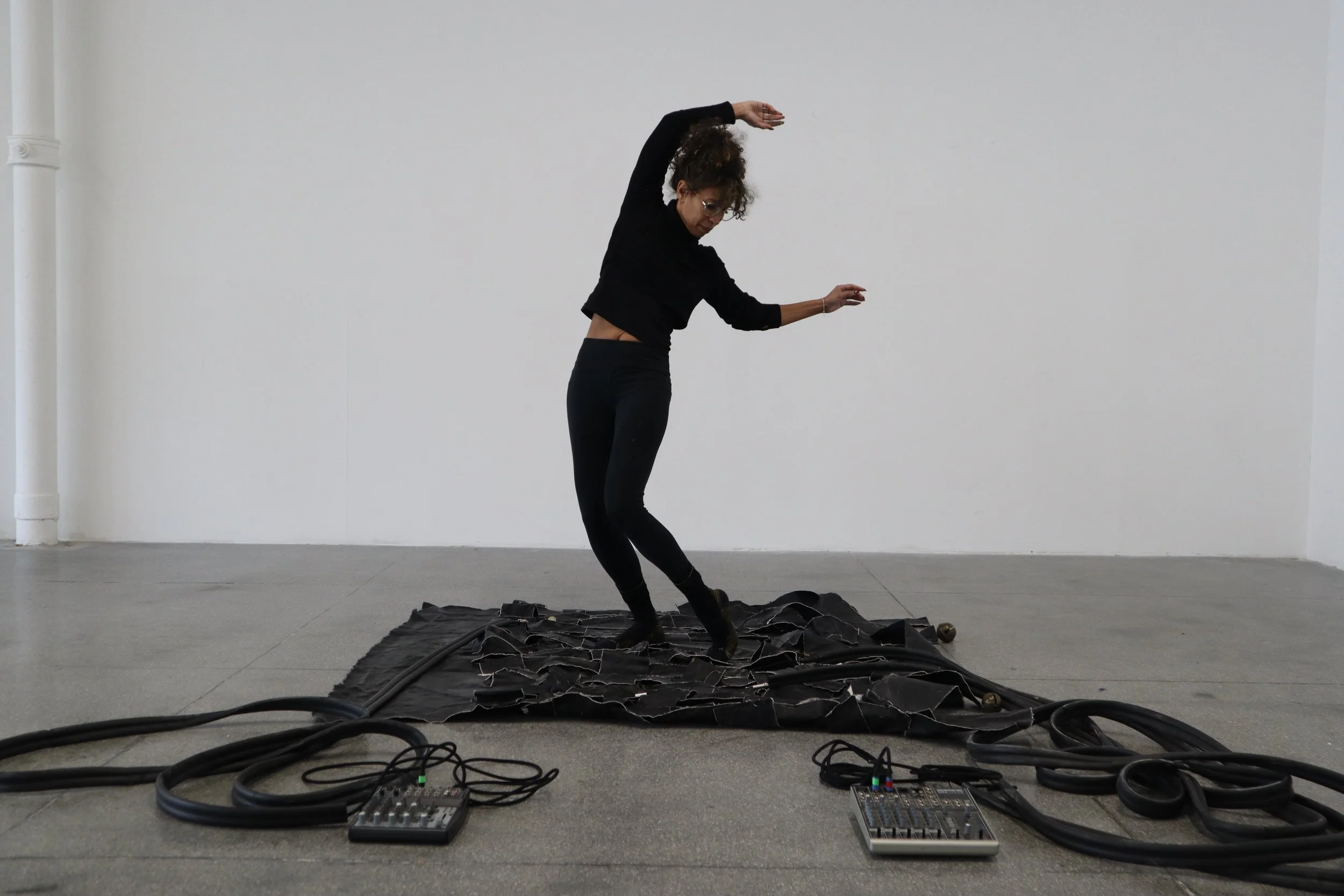
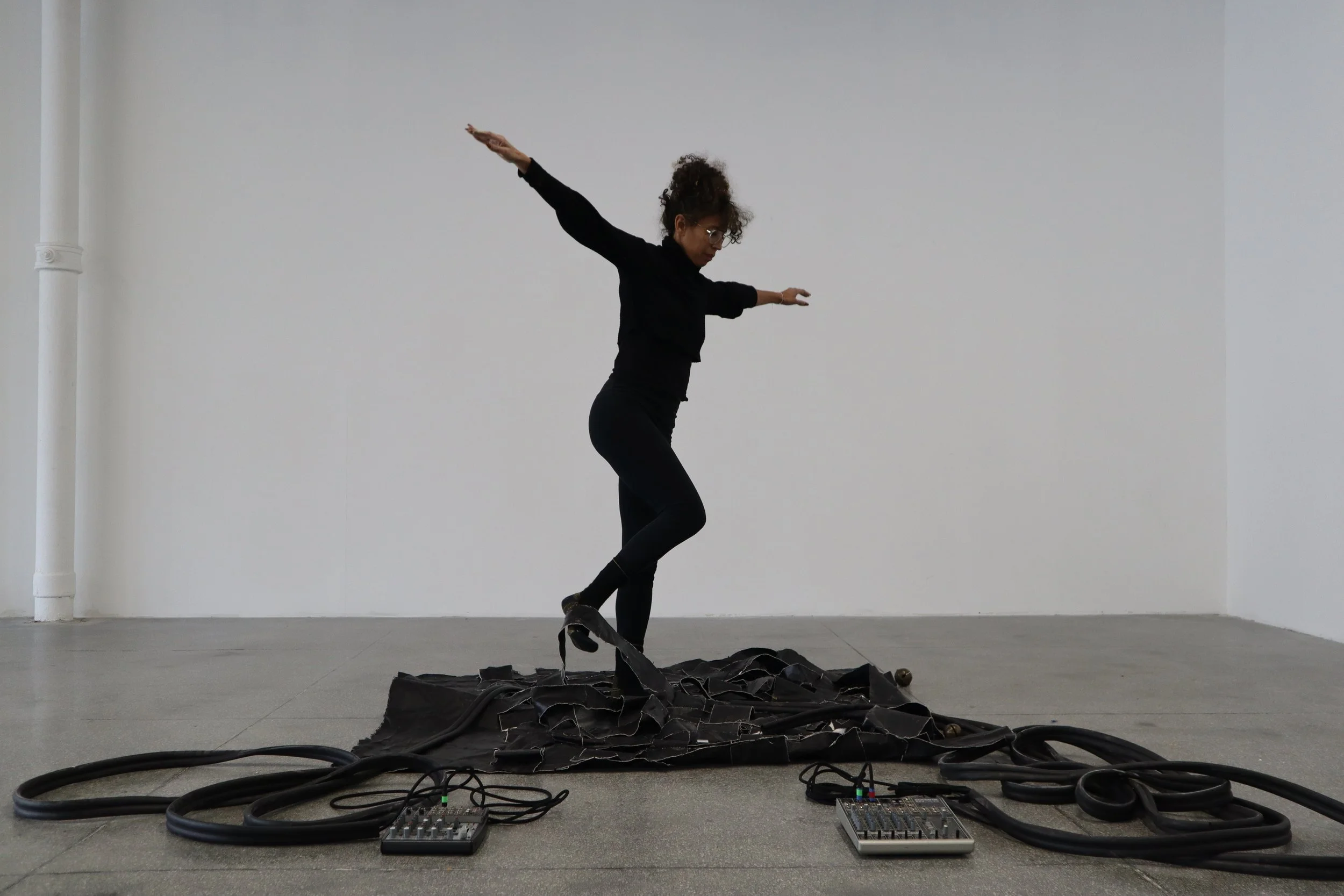
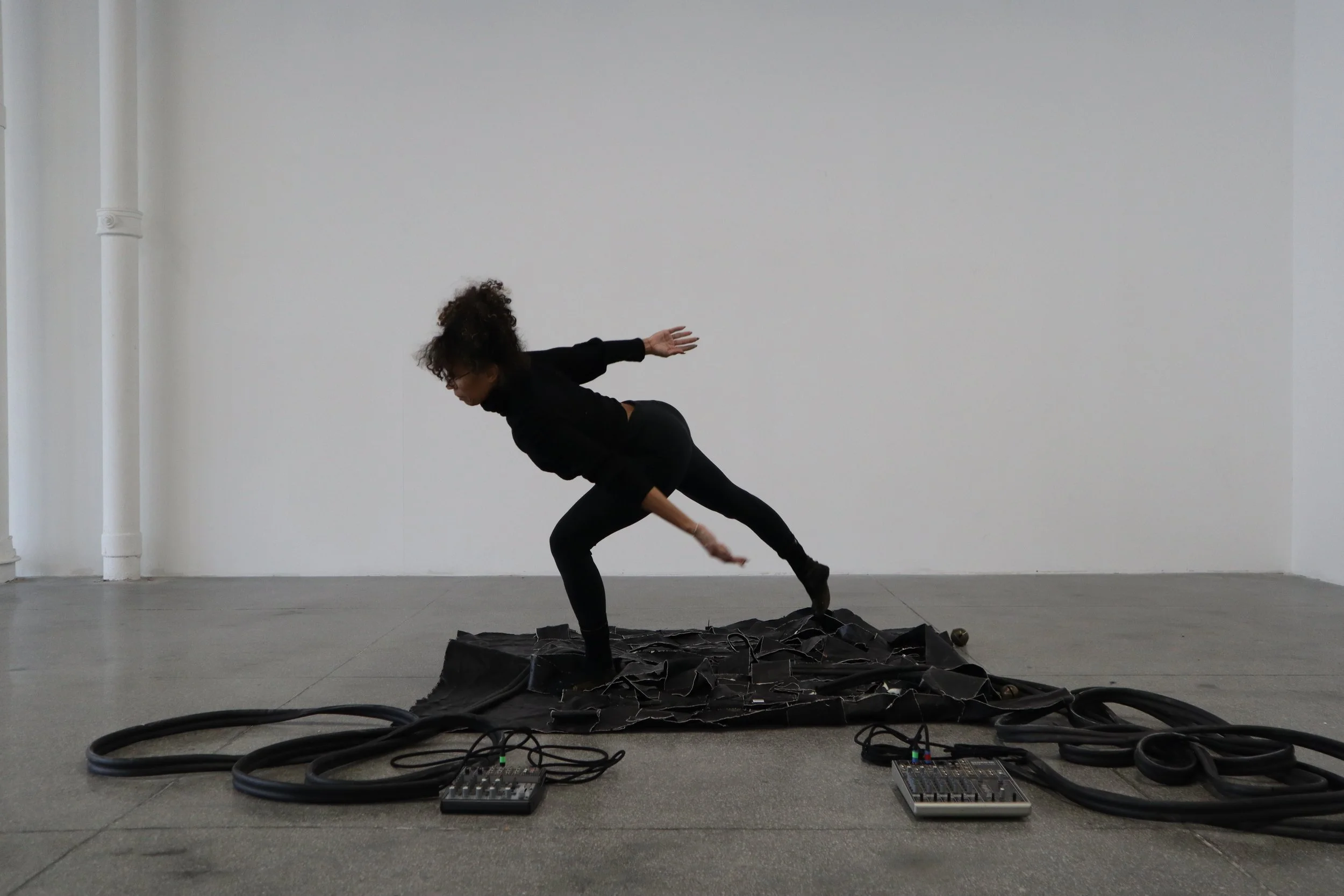
I created Sliding Fields to choreograph sound — to treat sound as a dancer moving across surface and through time. The instrument allows me to trace accumulation: how a gesture lingers, how vibration carries history, how sound shapes space before it fades.
This work is connected to my ongoing investigation of the Bound Nubian — not as image, but as voice. Sliding Fields becomes a way of listening through time, of tracing what remains beneath containment. Sound is not decorative. It is structural. It builds space. It builds color. It builds duration.
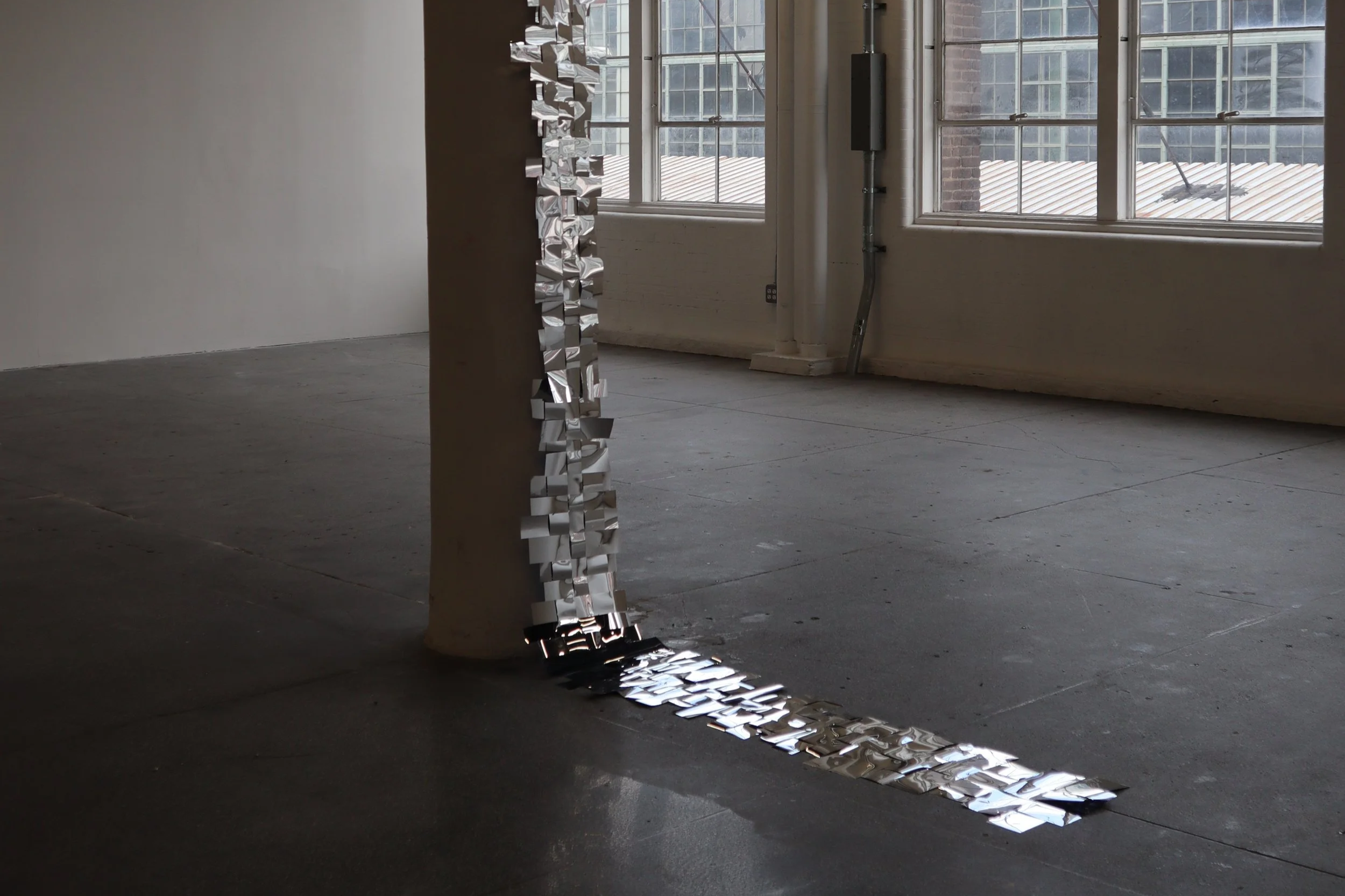
When installed, the instrument can exist as a flat plane, expand into volumetric form, or dissolve into an immersive field. The sculptures can sound autonomously through environmental vibration, or be activated through improvisation. The work is still in development. Its sensitivity and spatial behavior are being refined through repetition and installation.
Sliding Fields turns the ephemeral into environment — organically, improvisationally, and over time.
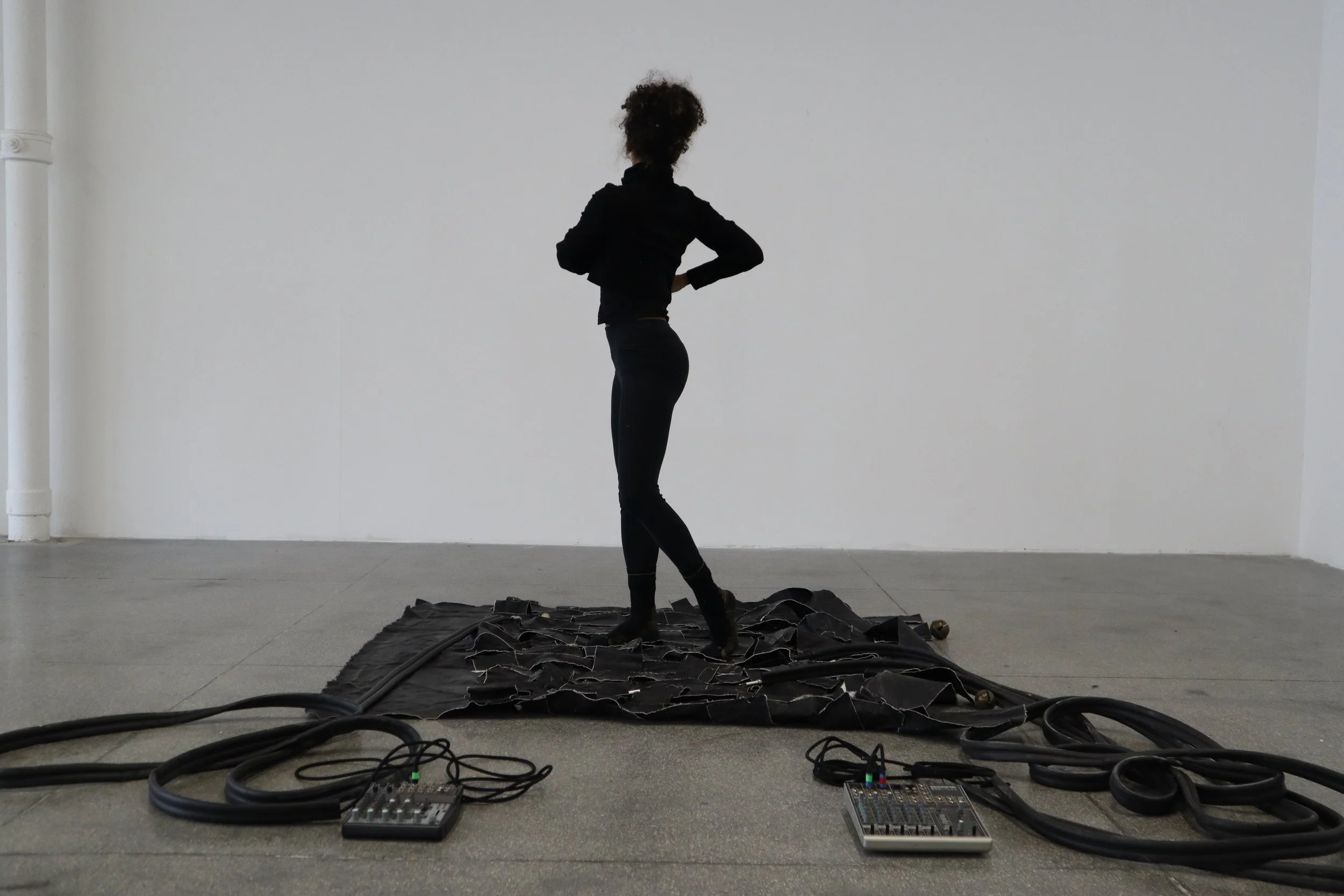
Under images of the sculptures “Work in Progress — evolving through repetition, performance, and installation.” Reference doc sonic instruments
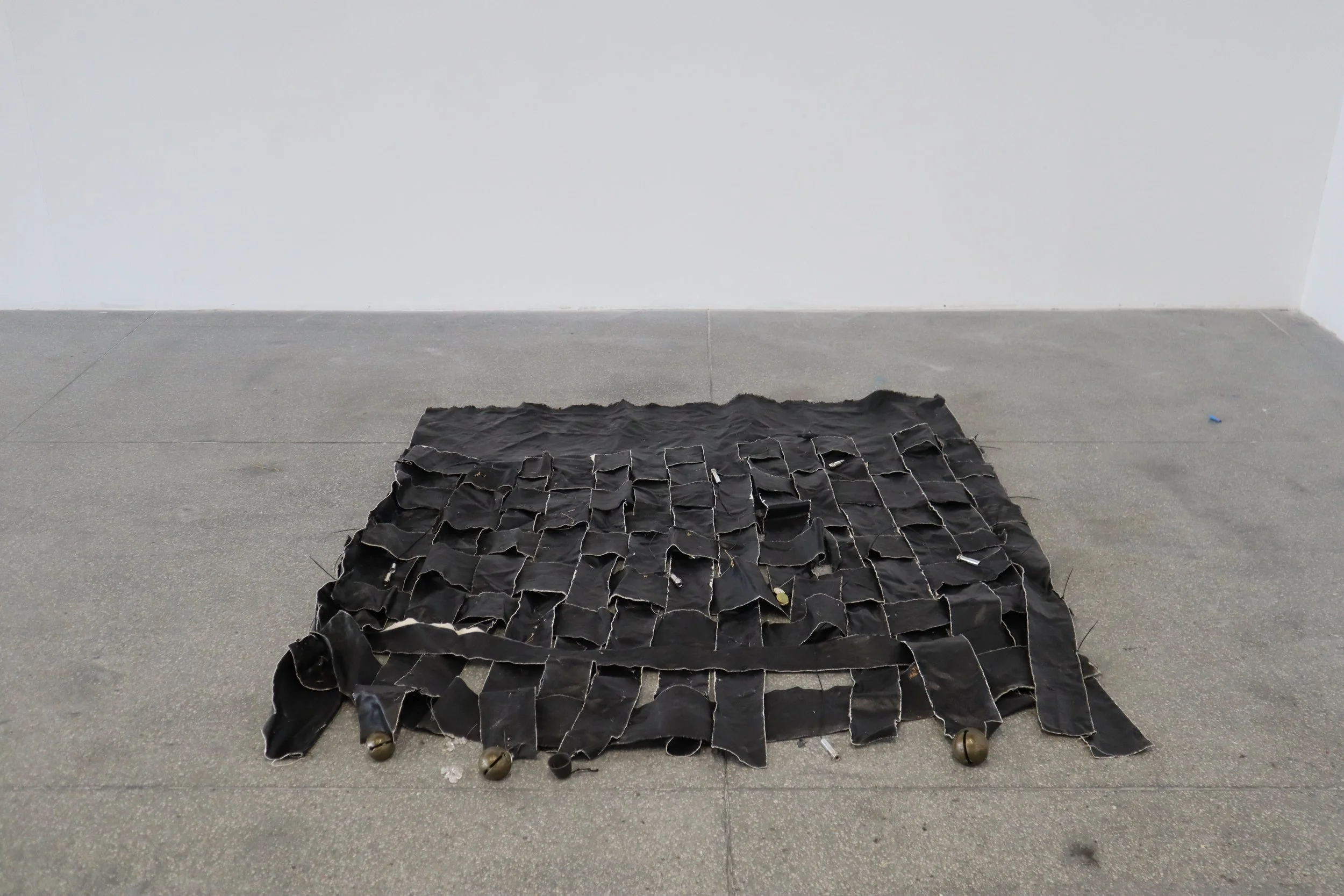
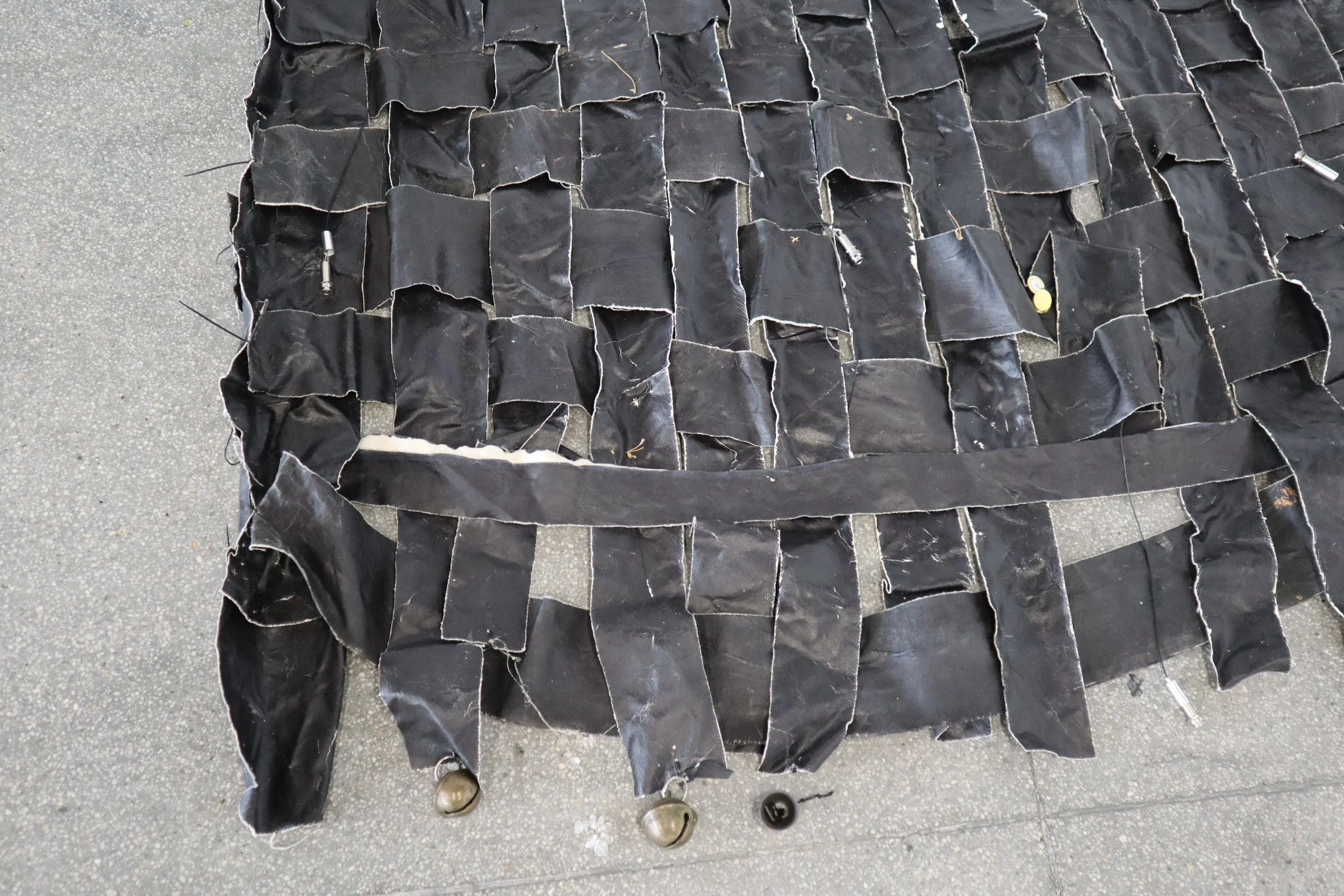
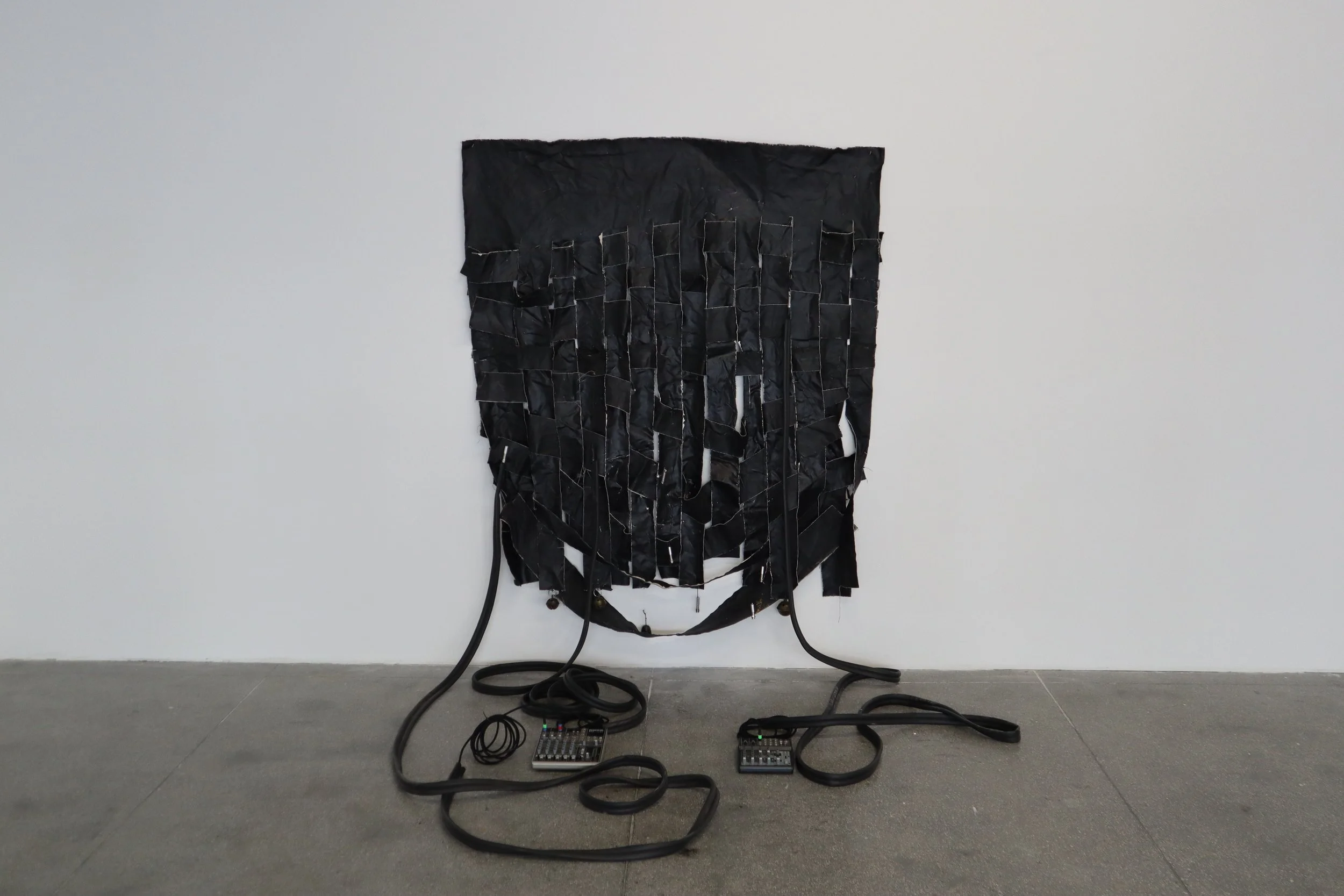
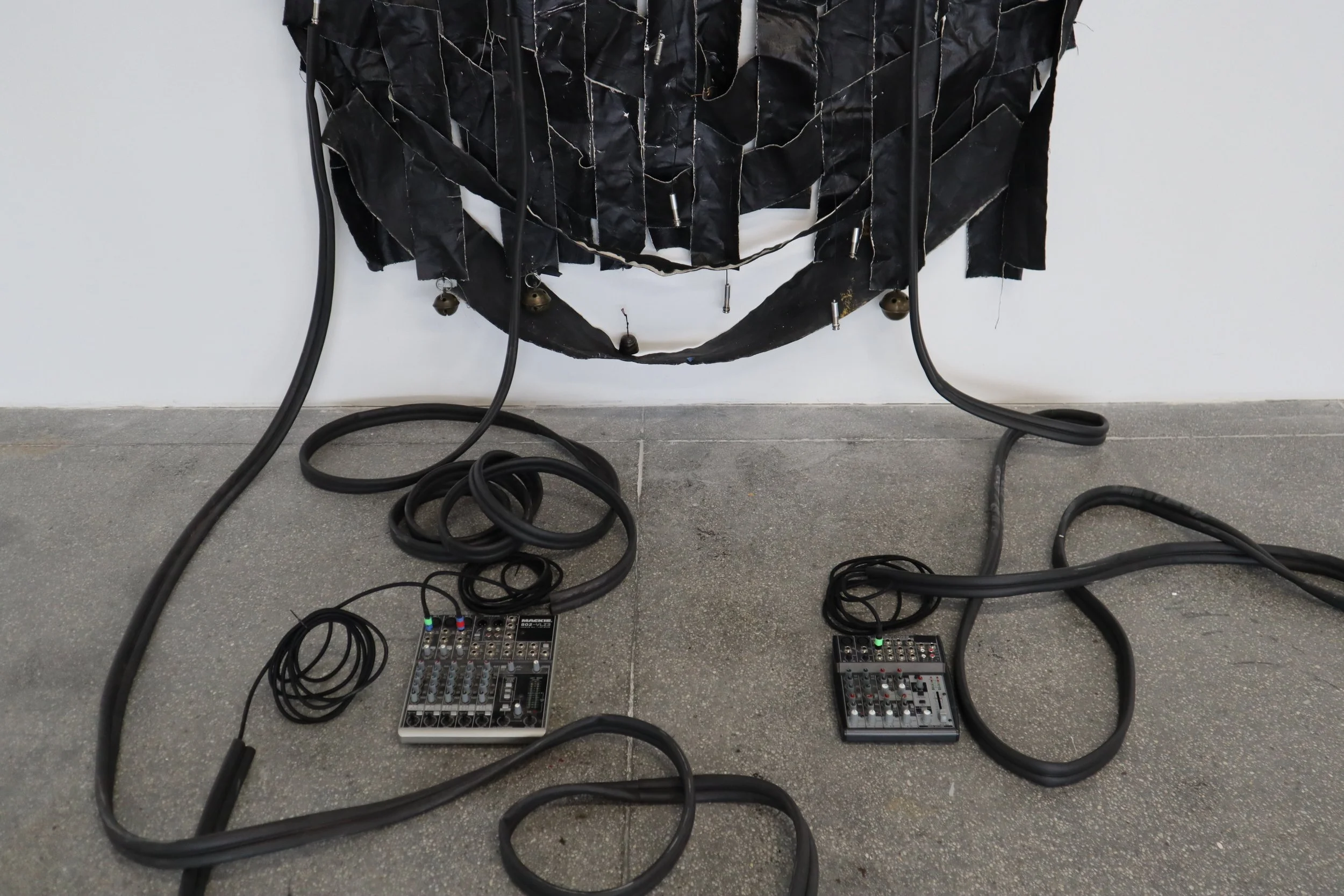
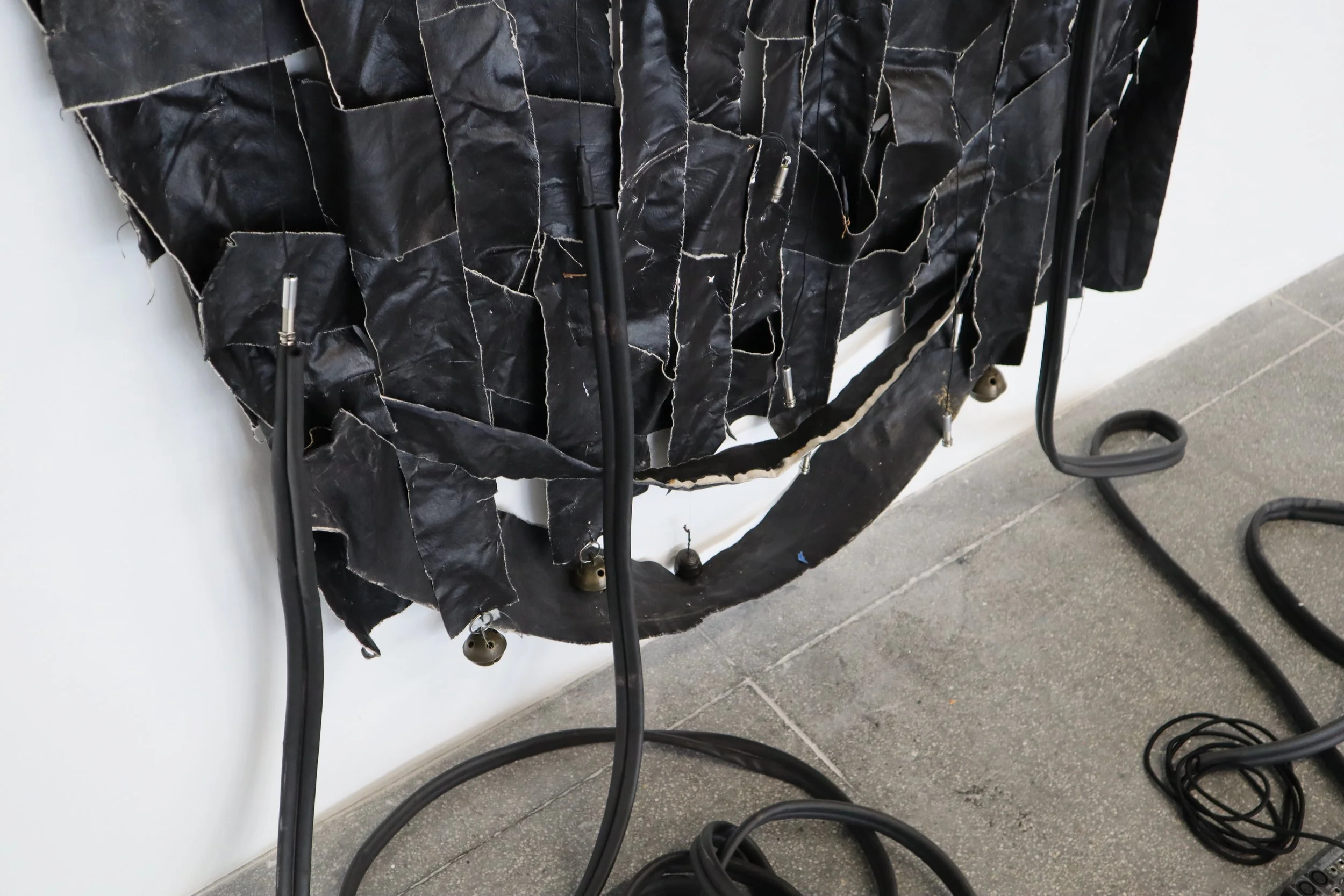
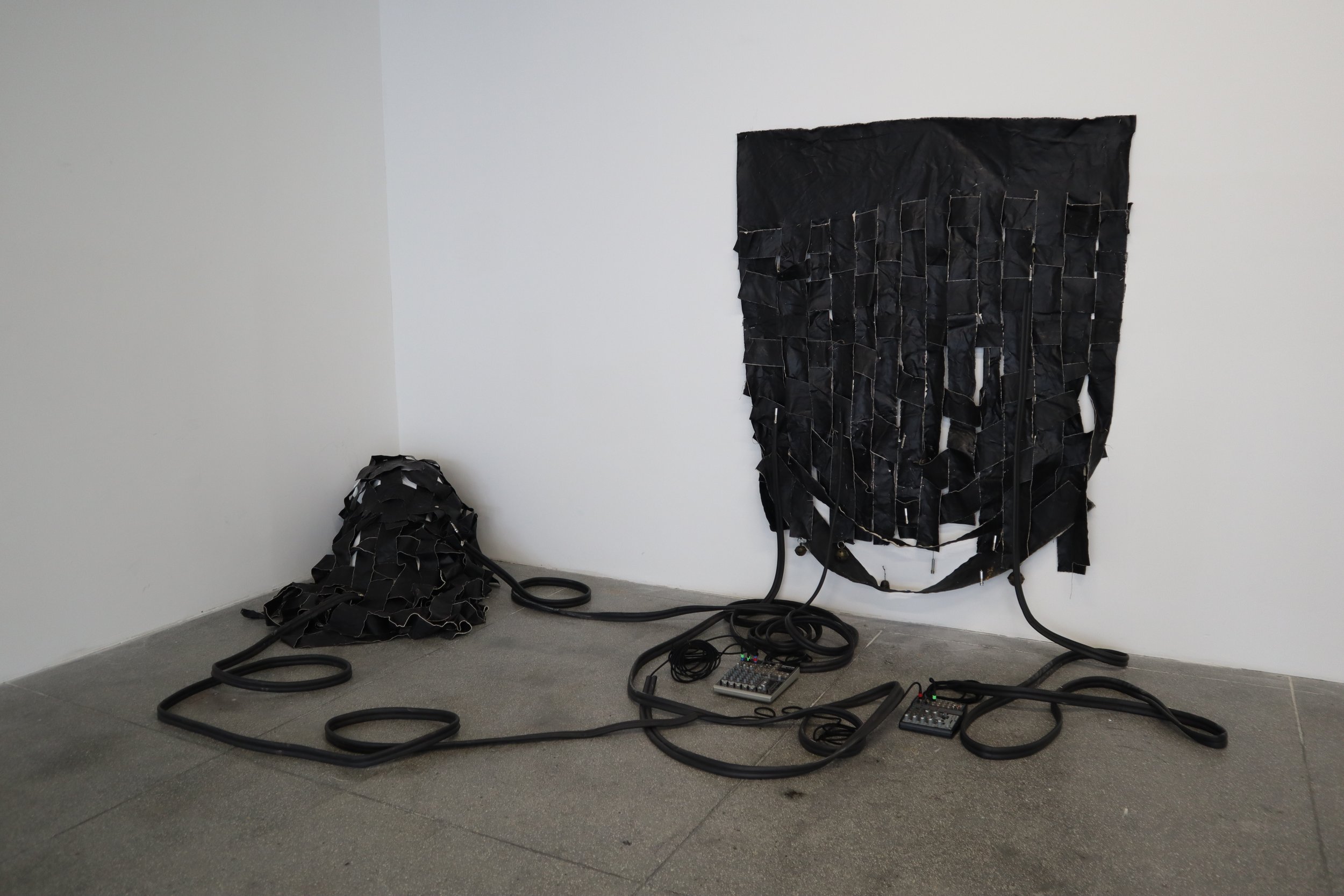
1. SONIC GROUND WEAVE
6’ × 6’ woven canvas with ten embedded contact microphones.
Installed on the wall or placed directly on the floor, the weave responds to vibration, air movement, and touch. When activated on the ground, sound emerges through shifts in weight, dragging, imbalance, and fatigue. Duration becomes structural. The body reads the surface through pressure and hesitation.
2. ELEVATED WEAVE FORM
3’ × 4’ × 1’27” woven canvas on carved foam with four contact microphones.
Hovering between object and ground, this sculpture operates as a resonant surface for leaning, partial weight-bearing, and sustained contact. It amplifies subtle shifts in balance and distributes vibration through layered material density.
3. DECONSTRUCTED TAPE SYSTEM
Wooden board with three contact microphones and three tape spools.
Magnetic tape is treated as tactile matter rather than fixed playback medium. Drawn beneath microphones or threaded through the hands, it produces unstable tones that shift with speed, angle, moisture, and force. The tape is not replayed—it is encountered.